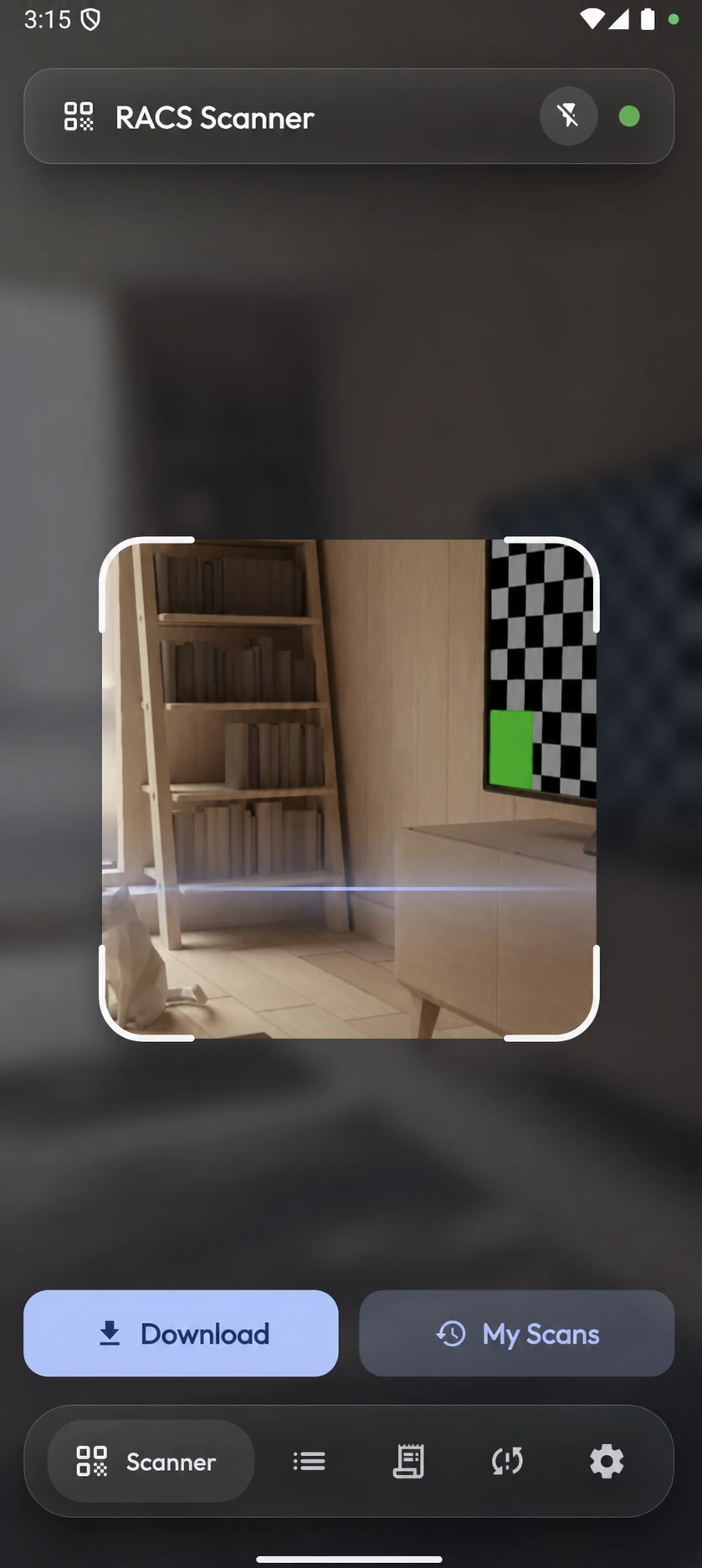
At the entrance · 01
One focused flow from camera to decision.
RACS keeps the interface deliberately spare. Operators prepare their campaign once, then each presentation produces a clear outcome while the system handles persistence and synchronisation underneath.
Legible outcomes · 02
The answer is readable at a glance.
A busy entrance should not require interpretation. Every card ends in a distinct state, while the exact machine flag remains attached for audit and reporting.
Access granted
Valid, current and unused
PASSED_OK
Already presented
Seen by this reader, a peer or the API
DUPLICATE
Access declined
Unknown, expired or invalidated card
REJECTED
Network resilience · 03
The venue can lose signal. The entrance keeps context.
RACS uses the server when it is available and local evidence when it is not. Nearby readers cooperate directly, closing the window where one pass could be accepted twice at separate doors.
Operational control · 04
More than a scanner.
The reader includes the small set of controls a deployment needs: campaign selection, local card management, scan history, queued work, diagnostics and connection settings.
Campaign sync
Select the event campaign, download its cards and see the local count before doors open.
My scans
Review a paginated on-device history with card label, outcome and exact timestamp.
Every attempt retained
Accepted and rejected presentations are stored locally and recorded centrally when reachable.
Retry visibility
Queued requests and application logs give operators evidence when connectivity needs attention.